Mobile-Friendly, Interactive Voter Guides
Secretary of State Candidates
Secretary of State Candidates
Listed in Ballot Order
Survey Questions for This Race
- Your Experience: What experience (personal, professional, budgetary, etc.) would you bring to your role as Secretary of State, which oversees a. Business and Licensing, b. Administration, and c. Information Technology?
- Your Vision: What is your vision for being our state's Secretary of State?
- Voter Registration: As Secretary of State, how would you ensure voter registration lists are accurate, up to date, and compliant with state and federal law?
- Election Integrity: Do you believe that elections should be conducted differently in order to ensure integrity and confidence? Should people be required to show proof of citizenship in order to register to vote, and/or be required to show a Government-issued ID to cast their vote? What measures would you implement to ensure ballot security?
- Election Management: To what extent should Colorado counties determine and manage their election processes through their local Clerk and Recorder office, and which parts of the election process should be determined and managed by the Secretary of State's office? What steps would you take to protect Colorado's election systems from cybersecurity threats while maintaining accessibility and efficiency for voters?
- ERIC: Do you support Colorado's continued use of third-party electronic voter data systems like the Electronic Registration Information Center (ERIC) system? Please explain.
- Federal Engagement: What role, if any, should federal agencies play in supporting or overseeing State election systems?
- Campaign Finance Oversight: The Secretary of State plays a role in enforcing campaign finance laws. How would you ensure these laws are applied fairly, consistently, and without partisan bias? How would you monitor and enforce regulations regarding campaign and lobbyist financial disclosures?
- Business Services and Economic Impact: The Secretary of State's office oversees business filings and licensing. How would you improve efficiency and accessibility for Colorado businesses while maintaining accurate records and preventing fraud?
- Use of Data and Performance Metrics: What benchmarks or performance measures would you use to evaluate the effectiveness of election administration and business services, and how would you communicate those results to the public?
Amanda Gonzalez
Candidate Chose to Not Participate
James Wiley
Your Experience
What experience (personal, professional, budgetary, etc.) would you bring to your role as Secretary of State, which oversees a. Business and Licensing, b. Administration, and c. Information Technology?
I bring an MBA and management background, years running a technology and marketing consulting practice, and six years of election-integrity work across Colorado. I have managed budgets and teams, scaled nonprofit and party operations, and led complex projects from litigation support to county-level recounts and forming liberty coalitions. That mix of business operations, administration, and hands-on technology experience is what the Secretary of State's office needs to run Business and Licensing, Administration, and Information Technology for the people of Colorado. I am the founder of the Union of Ballot Counters, a labor right movement in the elections space, and one of the top experts on elections in Colorado.
Your Vision
What is your vision for being our state's Secretary of State?
My vision is citizen-controlled elections Coloradans can trust: one day, in person, with voter ID, paper ballots, and hand counting where clerks choose that method. I will aggressively maintain accurate voter rolls, restore home rule so County Clerks can run elections tailored to their communities under clear statewide security standards, put public records on an immutable ledger (Liberty Chain), and slash red tape for business filings so entrepreneurs choose Colorado again. The mission is simple: restore trust, protect sovereignty, and make the office serve citizens—not bureaucracy.
Voter Registration
As Secretary of State, how would you ensure voter registration lists are accurate, up to date, and compliant with state and federal law?
I will continuously audit and clean the rolls of ineligible registrations—deceased voters, duplicates, and non-citizens—while protecting every eligible Coloradan. Citizenship verification at registration is essential so only eligible citizens decide Colorado elections. Eligible voters stay on the rolls; we do not punish lawful voters. Maintenance should be routine, transparent, and compliant with state and federal law, with public auditability so citizens can see that the list is accurate and up to date.
Election Integrity
Do you believe that elections should be conducted differently in order to ensure integrity and confidence? Should people be required to show proof of citizenship in order to register to vote, and/or be required to show a Government-issued ID to cast their vote? What measures would you implement to ensure ballot security?
Yes. Colorado should return to elections that restore confidence: one-day, in-person voting with government-issued voter ID, paper ballots, and citizen-controlled tabulation with strict chain of custody and observers. Proof of citizenship should be required to register, and ID should be required to vote. Ballot security means ending reliance on opaque electronic systems where possible, documenting custody from printing through counting, and giving clerks and citizens tools to verify results. Trust follows transparency and accountability.
Election Management
To what extent should Colorado counties determine and manage their election processes through their local Clerk and Recorder office, and which parts of the election process should be determined and managed by the Secretary of State's office? What steps would you take to protect Colorado's election systems from cybersecurity threats while maintaining accessibility and efficiency for voters?
County Clerks know their communities best. I will restore true home rule: clerks manage local election operations tailored to rural and urban counties, while the Secretary of State sets clear statewide standards for security, transparency, and eligibility—and gets out of the way of one-size-fits-all overreach. Cybersecurity means reducing attack surface (including AI-compromised electronic machines), strong chain of custody, citizen auditability, and Liberty Chain for tamper-evident records—without sacrificing lawful access for eligible voters.
ERIC
Do you support Colorado's continued use of third-party electronic voter data systems like the Electronic Registration Information Center (ERIC) system? Please explain.
I do not support outsourcing core voter-roll integrity to third-party systems Coloradans cannot fully audit. ERIC and similar programs raise transparency, governance, and data-control concerns. Colorado should prioritize in-state maintenance, citizenship verification, and public auditability under Colorado law and County Clerk leadership. Any interstate data tool must meet strict security, consent, and citizen-oversight standards—or we should not use it. I will put Coloradans' control of our rolls first.
Federal Engagement
What role, if any, should federal agencies play in supporting or overseeing State election systems?
Elections are a state responsibility. Federal agencies should not run or micromanage Colorado's election systems. Limited, lawful cooperation on shared criminal threats or clear federal requirements may be appropriate, but sovereignty means Colorado citizens and County Clerks—not Washington—set how we register voters, secure ballots, and count them. I will resist federal overreach while complying with the Constitution and defending Colorado's authority to run clean, citizen-controlled elections.
Campaign Finance Oversight
The Secretary of State plays a role in enforcing campaign finance laws. How would you ensure these laws are applied fairly, consistently, and without partisan bias? How would you monitor and enforce regulations regarding campaign and lobbyist financial disclosures?
Campaign finance and lobbyist disclosure rules must be enforced the same way for everyone—clear standards, consistent timelines, and no selective targeting. I will prioritize transparent TRACER-style disclosure that citizens can actually use, timely filing, and evenhanded enforcement based on the facts and the law. Lobbyist and campaign reports should be easier to find and harder to game. Fairness and consistency rebuild trust; partisan double standards destroy it.
Business Services and Economic Impact
The Secretary of State's office oversees business filings and licensing. How would you improve efficiency and accessibility for Colorado businesses while maintaining accurate records and preventing fraud?
Colorado lost over 30,000 businesses last year. The Secretary of State's office should make forming and maintaining a business faster, cheaper, and clearer: digitize and automate filings, cut needless friction, keep accurate public records, and use tools like Liberty Chain to deter fraud and tampering. Small businesses, nonprofits, and rural communities deserve an office that serves entrepreneurs—not one that buries them in red tape—while protecting the integrity of the public record.
Use of Data and Performance Metrics
What benchmarks or performance measures would you use to evaluate the effectiveness of election administration and business services, and how would you communicate those results to the public?
I will publish clear public metrics: roll accuracy (removals of deceased, duplicates, and non-citizens; time to resolve list issues), election transparency (chain-of-custody completeness, audit/recount turnaround), cybersecurity posture, and business-service performance (filing turnaround times, error rates, customer wait times). Results should be posted in plain language for citizens and clerks—not buried in bureaucracy—so Coloradans can judge whether the office is delivering trust, speed, and accountability.
Sean Vadney
Your Experience
What experience (personal, professional, budgetary, etc.) would you bring to your role as Secretary of State, which oversees a. Business and Licensing, b. Administration, and c. Information Technology?
I bring experience as a business owner, political organizer, communicator, and work in accounting and finance. Having personally registered an LLC in Colorado, I understand firsthand the business and licensing process and believe it can be simpler and less expensive. My leadership and communications experience has taught me how to manage priorities, work within limited resources, and remain accountable to the people I serve. For Information Technology, I would work closely with qualified professionals to ensure Colorado’s systems are secure, reliable, modern, and accessible while maintaining responsible oversight of taxpayer dollars.
Your Vision
What is your vision for being our state's Secretary of State?
My vision is to make the Colorado Secretary of State’s office more accessible, efficient, and accountable to the people it serves. I want to protect fair and secure elections while expanding voter choice, make it easier and less expensive to start and operate a business, and ensure the office uses taxpayer dollars responsibly. Ultimately, I want the office to serve Coloradans—not political parties or special interests—and give individuals greater freedom in both our elections and our economy.
Voter Registration
As Secretary of State, how would you ensure voter registration lists are accurate, up to date, and compliant with state and federal law?
I would ensure Colorado’s voter registration lists remain accurate through regular, transparent, and legally compliant list maintenance. This means securely comparing records with reliable state and federal data, promptly updating legitimate changes, and working closely with county clerks. At the same time, safeguards must prevent eligible voters from being improperly removed. Accurate voter rolls strengthen election security, but maintaining them must always respect due process and every eligible Coloradan’s right to vote.
Election Integrity
Do you believe that elections should be conducted differently in order to ensure integrity and confidence? Should people be required to show proof of citizenship in order to register to vote, and/or be required to show a Government-issued ID to cast their vote? What measures would you implement to ensure ballot security?
I believe Colorado should continue strengthening its election system to ensure both election integrity and public confidence. I support requiring proof of U.S. citizenship when registering to vote and requiring government-issued identification when casting a ballot. These requirements should be implemented in a way that is straightforward and accessible so that eligible voters are not unnecessarily prevented from exercising their right to vote.
Election Management
To what extent should Colorado counties determine and manage their election processes through their local Clerk and Recorder office, and which parts of the election process should be determined and managed by the Secretary of State's office? What steps would you take to protect Colorado's election systems from cybersecurity threats while maintaining accessibility and efficiency for voters?
I believe Colorado’s county Clerks and Recorders should retain significant authority over the day-to-day administration of elections because they understand the needs of their communities. Counties should manage polling and voting locations, staffing, ballot processing, voter assistance, and other local election operations. The Secretary of State’s office should establish consistent statewide standards, certify voting systems, maintain statewide election infrastructure, enforce election laws, and provide oversight and support so that voters receive a secure and consistent election process regardless of where they live.
ERIC
Do you support Colorado's continued use of third-party electronic voter data systems like the Electronic Registration Information Center (ERIC) system? Please explain.
Colorado can benefit from interstate voter-data sharing while still maintaining strong state oversight. Continued participation in ERIC should be conditioned on strict privacy and cybersecurity standards, regular independent audits, transparency about what information is shared, and verification of potential voter-record matches by Colorado election officials before any action is taken. Colorado should also periodically review the program to ensure it continues to provide meaningful benefits while protecting voters’ personal information.
Federal Engagement
What role, if any, should federal agencies play in supporting or overseeing State election systems?
I believe federal agencies should play a supporting role in elections, while states and local governments should retain primary responsibility for administering them. Federal agencies can provide cybersecurity expertise, funding, technical assistance, and information about threats to election infrastructure. They should also enforce federal election and voting-rights laws and help establish baseline security and accessibility standards. However, I do not believe the federal government should take over the day-to-day management of state election systems. A strong partnership allows states to maintain control of their elections while still benefiting from federal resources and expertise when needed.
Campaign Finance Oversight
The Secretary of State plays a role in enforcing campaign finance laws. How would you ensure these laws are applied fairly, consistently, and without partisan bias? How would you monitor and enforce regulations regarding campaign and lobbyist financial disclosures?
As Secretary of State, I would ensure that campaign finance laws are enforced consistently and without regard to political party, ideology, or candidate. The same standards, procedures, and penalties should apply to everyone. I would support clear enforcement guidelines, transparent decision-making, and regular review of campaign finance filings to identify potential violations.
Business Services and Economic Impact
The Secretary of State's office oversees business filings and licensing. How would you improve efficiency and accessibility for Colorado businesses while maintaining accurate records and preventing fraud?
As Secretary of State, I would work to make Colorado one of the easiest and most affordable states to start and maintain a business. I would streamline the online filing system, eliminate unnecessary steps and red tape, and look for opportunities to reduce filing fees while ensuring services remain reliable and accessible.
At the same time, convenience cannot come at the expense of accurate records or security. Colorado already has procedures for addressing fraudulent and unauthorized business filings, and I would strengthen prevention through secure account verification, notifications when changes are made to business records, and a clear process for businesses to quickly report suspicious activity.
Use of Data and Performance Metrics
What benchmarks or performance measures would you use to evaluate the effectiveness of election administration and business services, and how would you communicate those results to the public?
I would use practical benchmarks that show whether the Secretary of State’s office is serving Coloradans effectively. For elections, I would measure ballot and voter registration accuracy, audit results, security incidents, accessibility, processing times, and how quickly problems are identified and resolved. For business services, I would track filing turnaround times, error rates, website reliability, customer satisfaction, fees, and response times.
Transparency would be just as important as measuring performance. I would publish these results regularly in a simple, accessible online format so Coloradans can see what is working and where improvement is needed. The public deserves clear information and measurable results from its Secretary of State.
Amanda Campbell
Your Experience
What experience (personal, professional, budgetary, etc.) would you bring to your role as Secretary of State, which oversees a. Business and Licensing, b. Administration, and c. Information Technology?
I was raised in a political family, that was engaged in many petition and political campaigns. I bring organizational skills and a perspective of a third party to election integrity.
Your Vision
What is your vision for being our state's Secretary of State?
The definition of insanity is trying the same thing over again, expecting a different result. It's time a literal third-party steps into the office to bring real change.
Voter Registration
As Secretary of State, how would you ensure voter registration lists are accurate, up to date, and compliant with state and federal law?
Previous administrations have made several great strides in this area. However, those efforts need to continue. New strategies need to be developed that will bring security to the mail-in ballot system. The biggest component to election integrity is for citizens to become involved and engaged in the election process.
Election Integrity
Do you believe that elections should be conducted differently in order to ensure integrity and confidence? Should people be required to show proof of citizenship in order to register to vote, and/or be required to show a Government-issued ID to cast their vote? What measures would you implement to ensure ballot security?
If you are eligible to vote, you should be willing to prove that. Verifying who you are and that you belong in the county where you are voting is not an attack on anyone who has a legitimate right to vote. I am in favor of requiring people to show they are who they say they are and that they live where they claim to live. A government-issued ID for casting a ballot fits that same principle. Proof of citizenship at registration is the same idea taken one step further: eligibility is not a suggestion.
Every system has flaws. Enforce the checks and balances. Clean the lists and keep ballot handling with the county Clerk and Recorder.
Election Management
To what extent should Colorado counties determine and manage their election processes through their local Clerk and Recorder office, and which parts of the election process should be determined and managed by the Secretary of State's office? What steps would you take to protect Colorado's election systems from cybersecurity threats while maintaining accessibility and efficiency for voters?
As a party, we believe in local government. Counties should run registration, ballots, and Election Day operations through their Clerk and Recorder. The Secretary of State sets statewide standards, supervises them, and then gets out of the way.
Computers are not perfect. Protect the systems we use without making voting or county work so complicated that eligible people and local clerks cannot do the job. Accessibility and efficiency still matter. Keep oversight in the counties, not locked inside a handful of offices.
ERIC
Do you support Colorado's continued use of third-party electronic voter data systems like the Electronic Registration Information Center (ERIC) system? Please explain.
Yes, it is a step in the right direction.
Federal Engagement
What role, if any, should federal agencies play in supporting or overseeing State election systems?
Federal agencies should not oversee Colorado elections. That work belongs with the counties and the Secretary of State, kept as local as possible.
I do not believe it is appropriate for federal officers to step into state matters. Elections are no different. Washington does not need to run our systems, set our procedures, or sit in judgment of how Colorado counts its votes.
If there is any federal role at all, it is a narrow one: do not interfere. Citizen involvement and local Clerk and Recorder offices are what protect integrity—not another layer of federal control.
Campaign Finance Oversight
The Secretary of State plays a role in enforcing campaign finance laws. How would you ensure these laws are applied fairly, consistently, and without partisan bias? How would you monitor and enforce regulations regarding campaign and lobbyist financial disclosures?
Campaign finance rules have to mean the same thing for every committee. The filing is complete or it is not. I would apply the law the same way every time and not treat a party label as a reason to look harder or look away.
I will do my best to investigate and respond to citizen complaints. Campaigns and lobbyists should put the money on the record. Enforce the rules already on the books. The system should be easier for candidates and small committees who file for themselves. Clear reports and citizen eyes on them are what keep it fair.
Business Services and Economic Impact
The Secretary of State's office oversees business filings and licensing. How would you improve efficiency and accessibility for Colorado businesses while maintaining accurate records and preventing fraud?
My husband owns a small business. We have firsthand experience with the ups and downs of licensing and other filings. The system could be easier to navigate for business owners who are self-filers.
That is where I would start. Clearer steps, less runaround, and an office that actually helps someone trying to file it themselves. Accurate records still matter. A filing has to be real, and names and documents have to match. I will do my best to investigate and respond when a complaint comes in or a record looks wrong. Making the process usable for small owners is not the same thing as letting fraud slide.
Use of Data and Performance Metrics
What benchmarks or performance measures would you use to evaluate the effectiveness of election administration and business services, and how would you communicate those results to the public?
The tests that matter are simple. Are voter lists cleaner than they were? Do eligible voters get through the process without chaos? Do citizen complaints get an answer in a fair and timely way? Can a small-business owner who files for themselves get licensing and other filings done without getting lost?
Election administration works if counties can run the work locally and people can see it. Business services work if the records are accurate and the process is usable.
I would put those results in plain language where the public can actually find them—not buried in a report only staff read. If citizens cannot see the numbers and the problems, the measurement does not mean much.
Celeste Landry
Your Experience
What experience (personal, professional, budgetary, etc.) would you bring to your role as Secretary of State, which oversees a. Business and Licensing, b. Administration, and c. Information Technology?
My degrees in Math and Operations Research give me the technical background to run an efficient organization with good customer service and helpful IT front and center. Having worked as a production scheduler for two manufacturing companies in Colorado, I understand the complexities and steps to get products out the door. The Department of State’s fourth division is Elections (not mentioned in the question) which receives the most attention. I have worked with the Elections Division staff on many occasions, lobbying for better laws, rules and public information. I have successfully led county and statewide nonpartisan groups working to educate and advocate for better elections. I am a nationally recognized expert in ranking and rating voting methods.
Your Vision
What is your vision for being our state's Secretary of State?
1. Be a nonpartisan Secretary of State (SOS) serving all Coloradans and county clerks, regardless of party affiliation.
2. Protect your right to vote in ALL elections in the face of national threats, in SPECIAL elections to fill county commissioner and legislative seats, and in MUNICIPAL elections when you cannot return a paper ballot by Election Day.
3. Write the rules requested by Colorado cities for proportional ranked voting (rules also required by a 2008 statute) and simple-to-implement approval voting.
4. Ensure that electronic voting from home is restricted to those who need it. Prioritize mail-in ballots/drop boxes and in-person vote centers.
5. Evaluate the campaign finance, business licensing and IT sections to find and implement improvements.
Voter Registration
As Secretary of State, how would you ensure voter registration lists are accurate, up to date, and compliant with state and federal law?
Voter registration lists are continually updated and cross-checked with state and ERIC databases. Some county clerks, especially with highly mobile populations, e.g., El Paso County, have had good experiences cleaning up voter rolls with the help of credit reporting agencies’ data. Federal and state laws have guards against mass, indiscriminate removal of voters from the rolls. Balancing a voter’s right to a ballot with accurate records is important.
As SOS, I would direct my staff to conduct routine maintenance, as the laws and schedules dictate – moving people back and forth from active voter to inactive to not registered. I would direct my staff to investigate credible complaints about inaccurate voter registration lists and try to learn from the investigation.
Election Integrity
Do you believe that elections should be conducted differently in order to ensure integrity and confidence? Should people be required to show proof of citizenship in order to register to vote, and/or be required to show a Government-issued ID to cast their vote? What measures would you implement to ensure ballot security?
Election integrity’s goal: free and fair elections with trusted results. The entire process – from how candidates get on the ballot to campaign finance to media access to ballot delivery to plurality voting to semi-open primaries – affects the integrity of elections. Yes, changes would help improve integrity and confidence.
I’ve raised the alarm about El Paso County’s 11/4/2025 special election being the first instance in US history of unconstitutional disenfranchisement based on a voter’s party affiliation!
Colorado’s voter ID laws protect against ineligible individuals registering and voting. Lack of space here prevents a longer, more nuanced answer.
County clerks and I are discussing closing specific security gaps with mail-in ballots and lack of independent audits of Colorado’s election audits.
Election Management
To what extent should Colorado counties determine and manage their election processes through their local Clerk and Recorder office, and which parts of the election process should be determined and managed by the Secretary of State's office? What steps would you take to protect Colorado's election systems from cybersecurity threats while maintaining accessibility and efficiency for voters?
County clerks conduct elections – federal, state, county, school district, special district, municipal – following Title 1 of Colorado statute, providing statewide consistency and reducing confusion. The SOS oversees these elections. (Pitkin County elections for county offices are somewhat different but must follow Pitkin County’s unique home-rule charter.)
Municipalities and special districts may conduct their own elections under different statutory titles and, for instance, are not required to offer electronic ballot return (EBR) to overseas and blind voters.
The best way to protect against cybersecurity threats is to maintain paper ballots, offline voting systems and risk-limiting audits. I successfully got SB21-188 amended to reduce the voters offered EBR from anyone with a disability to only those with a print disability.
ERIC
Do you support Colorado's continued use of third-party electronic voter data systems like the Electronic Registration Information Center (ERIC) system? Please explain.
Yes. (Disclosure: My campaign’s registered agent, Wendy Underhill, directed the National Conference of State Legislatures’ Elections and Redistricting Program and reported on ERIC for NCSL.) ERIC is a voluntary, multi-state partnership which began with 7 states and in 2022 had 33 states. ERIC’s identification of voters who have moved, are registered in two different places, or have died accounted for the clean-up of more than 13 million records in its first 11 years. Beginning in 2022, several states left ERIC, citing the second mission of ERIC to help states reach out to potentially eligible, but not yet registered, individuals with information on how to register to vote. I appreciate both of ERIC’s missions.
Federal Engagement
What role, if any, should federal agencies play in supporting or overseeing State election systems?
The Election Assistance Commission (EAC) is an independent agency created by the Help America Vote Act of 2002. I commented on the drafting of their Voluntary Voting Systems Guidelines 2.0 (VVSG) which is now one of the standards Colorado uses (Rule 21). Unfortunately, two EAC commissioners resigned this year and President Trump fired the other two.
The Cybersecurity and Infrastructure Security Agency was a useful partner for states until it was revamped to sweep away some guardrails that prevented Trump from overturning the 2020 election. PBS interviewed Colorado election leaders Matt Crane and Carly Koppes about the gutting of CISA and other threats.
The federal government has no business gathering voter information. The states run elections, not the federal government.
Campaign Finance Oversight
The Secretary of State plays a role in enforcing campaign finance laws. How would you ensure these laws are applied fairly, consistently, and without partisan bias? How would you monitor and enforce regulations regarding campaign and lobbyist financial disclosures?
The Secretary of State oversees campaign finance laws for state and most county candidates, but not for federal candidates. I would convene a working group consisting of IT staff, campaign finance staff, people who have filed campaign finance complaints, and organizations that advocate for transparency and public access to financial information, such as Capitol Commons and the Colorado Freedom of Information Coalition. I would welcome the working group’s recommendations for improvement in reporting, monitoring, and enforcing campaign finance regulations. Perhaps the group could also work to improve consistency between Colorado and federal campaign finance laws.
Business Services and Economic Impact
The Secretary of State's office oversees business filings and licensing. How would you improve efficiency and accessibility for Colorado businesses while maintaining accurate records and preventing fraud?
In 2023 the Secretary of State's Business and Licensing Division won the International Association of Commercial Administrators (IACA) Merit Award for Innovative Customer Service in a Post-Covid World for creating a modernized check-in process. In 2026 the CO legislature passed HB26-1088 which allows the SOS to remove or mark business entities as fraudulent when certain conditions are met. The number of entities marked fraudulent rose from ~7,700 in the previous 3½ years to ~20,500 since the bill took effect; additionally, more than 10,000 entities were removed from the database.
As someone who has searched the database over the years and been frustrated with the haphazard listing of entities, I applaud these achievements and would continue striving for improvements.
Use of Data and Performance Metrics
What benchmarks or performance measures would you use to evaluate the effectiveness of election administration and business services, and how would you communicate those results to the public?
For election administration, my priority is measuring voter engagement – percent of the eligible population registered to vote, voter turnout, and the percent of ballots with votes in each contested race.
The Business and Licensing Division should determine measures for good customer service – not equivalent to the number of business filings – and collect the data.
The SOS staff and the county clerks should work to understand any process failures, hiccups and successes, as the department fulfills its core value “to strive for excellence.” Successes and failures should be reported in a timely fashion to all affected staff and Coloradans and soon thereafter on the SOS website and, as appropriate, in press releases to the public at large.
JOIN THE COALITION
JOIN OUR E-LIST
Christian voting
Voting is a simple, yet significant way to do something about public policy in our country. As people of faith, we will be held accountable for our actions, as well as our lack of action. (Luke 12:48)

Biblical worldview
By diligently learning, applying, and trusting God’s truths in every area of our lives, we can begin to develop a deep comprehensive faith that will stand against the unrelenting tide of our culture’s non-biblical ideas.
Vote your values
The issues of the day change. Political parties and platforms change. God’s Word never changes. The vote of every Christian should be based on the principles of Scripture and not persuasive personalities.
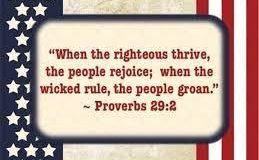
Electing righteous leaders
Bad governance and our loss of freedom is the direct result of the church’s failure to disciple. When the citizenry do not seek to be obedient to God’s Law, they vote in wicked and corrupt candidates, who then trample underfoot the God-given liberties of the people.