
Mobile-Friendly, Interactive Voter Guides
State House District 22 Candidates
State House District 22 Candidates
Listed in Ballot Order
Survey Questions for This Race
- Priorities, Vision, and Experience: What priorities and vision do you have for the office of Colorado State Representative, and how would your personal and professional experience contribute to that?
- Accountability: Colorado's Sunshine Law and Taxpayer Bill of Rights are examples of accountability measures that Colorado's electorate voted into law. What are your beliefs on ethics in government, and how would you seek to improve accountability and transparency as they relate to the office of Colorado State Representative?
- 1st Amendment: What are your thoughts on the establishment clause; and if elected, what will you do to protect your constituents' rights to freedom of religion, speech, peaceable assembly, and petitioning the government for a redress of grievances?
- 2nd Amendment: In light of recent Colorado legislation and US Supreme Court's rulings regarding our nation's historical tradition of firearms regulation, what steps would you take to protect the rights of the people while addressing gun violence?
- Anti-Americanism and Antisemitism: There has been a rise in incidences of anti-Americanism and antisemitism in Colorado and across our nation. What do you view as the causes, and what should be done to address these issues?
- Economy and Resources: If elected, what initiatives would you champion to improve Colorado's economy, including policies on water, energy, and other resources, and how would you make your office more fiscally responsible?
- Education: If elected, how would you help improve the educational outcomes for Colorado's students, and what is your position on parental authority in K-12 education, including school choice and parental notification?
- Protecting the Most Vulnerable: If elected, how will you seek to protect the lives of the most vulnerable in our community, including the unborn, victims of trafficking and abuse, senior citizens, and those experiencing mental illness?
- Public Safety and Rule of Law: What are your priorities for addressing crime in Colorado, including issues such as cybercrime and the slavery of human trafficking, and how do you view the role of state policy in addressing immigration-related challenges and coordination with federal authorities? Also, what is your opinion regarding sanctuary city (or county) policies?
- Election Integrity: Do you believe that elections should be conducted differently in order to ensure integrity and confidence? Should people be required to show proof of citizenship in order to register to vote, and/or be required to show a Government-issued ID to cast their vote?
- Constitutional Compatibility: Many Christians are concerned about ideologies that place the state, the collective, or religious law above individual liberty and limited constitutional government. Do you believe socialism, communism, or political movements seeking to impose religious law — including Islamic Sharia law — are compatible with America's constitutional representative democracy? Why or why not?
Michael Pierson
Priorities, Vision, and Experience
What priorities and vision do you have for the office of Colorado State Representative, and how would your personal and professional experience contribute to that?
My priority is putting working families first by lowering everyday costs, fully funding public schools, improving transportation, expanding access to affordable healthcare, and ensuring state government spends taxpayer dollars responsibly. I want practical solutions that improve people’s lives, not partisan arguments that lead nowhere.
I have lived in House District 22 for 20 years, and my wife and I raised our family here. During my Air Force career, including eight deployments, I learned to work with people from different backgrounds, build coalitions, communicate honestly, and accomplish the mission under difficult circumstances. I would bring that same results-oriented approach to the legislature: listen to constituents, work across party lines, and remain accountable to the people I represent.
Accountability
Colorado's Sunshine Law and Taxpayer Bill of Rights are examples of accountability measures that Colorado's electorate voted into law. What are your beliefs on ethics in government, and how would you seek to improve accountability and transparency as they relate to the office of Colorado State Representative?
Public trust depends on elected officials being honest about their decisions, transparent about who is influencing them, and responsible with taxpayer dollars. I support strong open-meeting, public-record, financial-disclosure, and campaign-finance requirements, along with meaningful enforcement when officials violate them.
As a state representative, I will explain my votes, make myself accessible to constituents, disclose potential conflicts of interest, and resist legislation shaped primarily for special interests. I would also support clearer public reporting of state spending and stronger oversight of contracts and programs so Coloradans can see whether their money is producing results. Voter-approved accountability measures must be respected, while any proposed changes should be presented openly and decided by the voters when required.
1st Amendment
What are your thoughts on the establishment clause; and if elected, what will you do to protect your constituents' rights to freedom of religion, speech, peaceable assembly, and petitioning the government for a redress of grievances?
The First Amendment protects both the free exercise of religion and the principle that government must not establish or favor a religion. Those protections reinforce one another: every Coloradan should be free to worship, speak, assemble, advocate, or follow no faith without government coercion or discrimination.
As a legislator, I would defend these rights consistently, including when I disagree with the views being expressed. I would oppose religious tests for public services or office, viewpoint discrimination, and unreasonable restrictions on peaceful speech, assembly, and petition. I would also keep my office accessible to constituents and protect their ability to communicate with their government, attend public meetings, organize peacefully, and hold elected officials accountable.
2nd Amendment
In light of recent Colorado legislation and US Supreme Court's rulings regarding our nation's historical tradition of firearms regulation, what steps would you take to protect the rights of the people while addressing gun violence?
I respect the Second Amendment. I also believe government has a responsibility to address preventable shootings, suicide, domestic violence, and illegal gun trafficking.
I would support constitutional, evidence-based measures such as enforcing background-check laws, promoting secure firearm storage, strengthening suicide-prevention efforts, and keeping guns away from violent offenders and domestic abusers. Extreme-risk protection orders must include clear standards, due process, and timely judicial review. I would also invest in mental-health care, community violence-intervention programs, and responsible gun-safety education. Protecting individual rights and improving public safety are not mutually exclusive; good policy must do both.
Anti-Americanism and Antisemitism
There has been a rise in incidences of anti-Americanism and antisemitism in Colorado and across our nation. What do you view as the causes, and what should be done to address these issues?
Antisemitism is fueled by ignorance, conspiracy theories, political extremism, online misinformation, and the tendency to blame entire communities for the actions of individuals or governments. It must be condemned consistently.
Criticism of American policies is protected speech and can reflect healthy democratic debate; threats, violence, vandalism, and targeted harassment are not. We should enforce laws against hate crimes and intimidation, improve security coordination with threatened religious and community institutions, teach accurate history, and strengthen media literacy so young people can recognize propaganda. Elected officials must lower the temperature, reject dehumanizing rhetoric, and model the patriotism of democratic participation: respecting constitutional rights while working together to improve our country.
Economy and Resources
If elected, what initiatives would you champion to improve Colorado's economy, including policies on water, energy, and other resources, and how would you make your office more fiscally responsible?
I would focus on an economy that works for working families: affordable housing and healthcare, strong public schools, reliable transportation, workforce training, and support for small businesses. Colorado also needs long-term resource planning. I support conserving water, repairing aging infrastructure, protecting agricultural and municipal supplies, and requiring water-intensive development to demonstrate sustainable sources.
Our energy strategy should provide reliable, affordable power while reducing pollution. That means renewable energy, storage, improved transmission, and exploring next-generation small modular nuclear power, with strong safety and cost protections. I would also require major data centers to account for their impacts on water, electricity, and household utility rates.
My office will publish expenses, explain votes, scrutinize ineffective programs, and judge spending by measurable results.
Education
If elected, how would you help improve the educational outcomes for Colorado's students, and what is your position on parental authority in K-12 education, including school choice and parental notification?
I would fully fund public schools, improve teacher recruitment and retention, expand career and technical education, strengthen early literacy, and ensure students can access mental-health and special-education services. Every student deserves a safe school and a strong education, regardless of ZIP code.
Parents are essential partners and should have meaningful access to curriculum, academic progress, school policies, and major decisions affecting their children. Notification policies should respect parental involvement while complying with the law and protecting a student’s safety and privacy in difficult circumstances. I support choices within the public education system, including neighborhood, charter, magnet, and vocational schools, with consistent standards and transparency. I oppose diverting public funds to unaccountable private programs that weaken neighborhood schools.
Protecting the Most Vulnerable
If elected, how will you seek to protect the lives of the most vulnerable in our community, including the unborn, victims of trafficking and abuse, senior citizens, and those experiencing mental illness?
Protecting vulnerable people requires practical support throughout their lives. I would expand access to prenatal care, maternal healthcare, nutrition, childcare, and other resources that help women experience healthy pregnancies and families thrive. I believe reproductive healthcare decisions should remain with patients and medical providers, with appropriate parental involvement for minors—not politicians.
I would strengthen prevention, survivor services, and law-enforcement coordination to combat trafficking and abuse, while ensuring victims have safe housing and trauma-informed care. For seniors, I would protect access to healthcare, home-based services, affordable housing, and safeguards against neglect and financial exploitation. I would also improve access to crisis response, treatment, supportive housing, and community-based mental-health services so people receive appropriate care before reaching a crisis.
Public Safety and Rule of Law
What are your priorities for addressing crime in Colorado, including issues such as cybercrime and the slavery of human trafficking, and how do you view the role of state policy in addressing immigration-related challenges and coordination with federal authorities? Also, what is your opinion regarding sanctuary city (or county) policies?
My priorities are preventing violent crime and supporting effective community policing. Colorado should fund specialized investigators, improve information-sharing, strengthen victim services, and hold criminals, not their victims, accountable.
Immigration enforcement is primarily a federal responsibility. State and local agencies should cooperate with federal authorities on valid warrants, trafficking, and serious violent crime, while remaining focused on public safety rather than conducting broad civil immigration enforcement. I oppose policies that shield dangerous offenders or obstruct lawful criminal investigations. I also oppose policies that make victims and witnesses afraid to report crimes, seek medical care, or cooperate with police. Local policies should build community trust, respect constitutional rights and due process, and make everyone safer.
Election Integrity
Do you believe that elections should be conducted differently in order to ensure integrity and confidence? Should people be required to show proof of citizenship in order to register to vote, and/or be required to show a Government-issued ID to cast their vote?
Colorado has built one of the nation’s strongest election systems, using paper ballots, signature verification, bipartisan oversight, secure ballot tracking, and post-election audits. Claims that our elections are broadly corrupt are unsupported and undermine confidence in a system administered by dedicated Republican, Democratic, and unaffiliated county clerks.
Only U.S. citizens may vote, and Colorado already requires voters to affirm their citizenship under penalty of perjury. I support using reliable government records to maintain accurate voter rolls but oppose unnecessary documentary barriers that could disenfranchise eligible citizens. Colorado also requires identification when registering and voting in person, while mail ballots undergo signature verification. I will defend these safeguards, fund election security, and support transparent audits.
Constitutional Compatibility
Many Christians are concerned about ideologies that place the state, the collective, or religious law above individual liberty and limited constitutional government. Do you believe socialism, communism, or political movements seeking to impose religious law — including Islamic Sharia law — are compatible with America's constitutional representative democracy? Why or why not?
No answer provided.
Ken deGraaf
Priorities, Vision, and Experience
What priorities and vision do you have for the office of Colorado State Representative, and how would your personal and professional experience contribute to that?
Government should serve the people, not rule them. My priorities are protecting constitutional rights and individual liberty, restoring public safety, controlling spending and taxes, reducing unnecessary regulation, and preserving opportunity for Coloradans to prosper through their own initiative.
Government should be limited, accountable, and focused on its proper responsibilities—not continually expanding its reach into our lives. I will judge legislation by whether it makes Coloradans freer, safer, and more prosperous.
As a United States Air Force Academy graduate, pilot, and legislator, I bring leadership, discipline, preparation, and accountability. Aviation taught me that decisions have consequences and responsibility cannot be delegated. Legislative experience has reinforced the need for fewer laws, better laws, and the courage to challenge government overreach.
Accountability
Colorado's Sunshine Law and Taxpayer Bill of Rights are examples of accountability measures that Colorado's electorate voted into law. What are your beliefs on ethics in government, and how would you seek to improve accountability and transparency as they relate to the office of Colorado State Representative?
Ethics in government begins with recognizing that public office is a public trust, not a personal entitlement. Legislators should be accountable to the people, follow both the letter and spirit of the law, and conduct their business openly.
I support Colorado’s Sunshine Law and Taxpayer’s Bill of Rights because voters have a right and a need to know how their government operates and how their money is spent. As a State Representative, I support greater transparency in legislative spending, conflicts of interest, and the development of legislation. I make my own votes, positions, and rationale readily accessible to constituents and welcome scrutiny—even when it is uncomfortable. Government should never fear transparency; it should fear losing the public’s trust.
1st Amendment
What are your thoughts on the establishment clause; and if elected, what will you do to protect your constituents' rights to freedom of religion, speech, peaceable assembly, and petitioning the government for a redress of grievances?
The First Amendment protects fundamental liberties that government must never treat as privileges. I believe the Establishment Clause prevents government from establishing or favoring a religion; it does not require hostility toward faith or remove religious expression from public life.
My job as a legislator isn’t to agree with everything that is said, but to defend to the death every citizen’s right to say it. I will defend the freedoms of religion, speech, peaceable assembly, and petitioning government for redress of grievances—including when those rights are exercised by people with whom I strongly disagree. Constitutional rights are not dependent on popular opinion; they are the limits placed on government.
2nd Amendment
In light of recent Colorado legislation and US Supreme Court's rulings regarding our nation's historical tradition of firearms regulation, what steps would you take to protect the rights of the people while addressing gun violence?
The Second Amendment protects an individual’s fundamental right to keep and bear arms. A firearm provides an individual the means to defend life, liberty, and property against an individual or institution. Its greater purpose is rooted in the Declaration of Independence: government exists to secure our rights, and when government becomes destructive of those ends, the people retain the means to resist tyranny.
I oppose laws that infringe on the rights of law-abiding citizens while supporting enforcement against those who misuse firearms. The answer to violence is not to disarm the people who obey the law. We must focus on protecting constitutional rights, holding violent criminals accountable, and ensuring government never becomes the threat the 2A exists to guard against.
Anti-Americanism and Antisemitism
There has been a rise in incidences of anti-Americanism and antisemitism in Colorado and across our nation. What do you view as the causes, and what should be done to address these issues?
Anti-Americanism grows when history is distorted, forgotten, or erased. Separating people from their history weakens identity and resolve. History is like a warning from the future—we cannot learn true lessons from false history, nor understand where we are going without understanding where we have been. Our Constitution recognizes human worth as Creator-endowed, not genetically determined; we cannot be E Pluribus Unum while factionalizing ourselves by phenotype.
We must teach history honestly—including America’s founding principles, achievements, failures, and sacrifices—without political revisionism. Schools should teach students to recognize propaganda, discuss ideas openly, and distinguish disagreement from attacks based on identity.
Government should enforce laws against threats and violence while protecting free speech. The answer to hatred is truth, education, accountability, and liberty.
Economy and Resources
If elected, what initiatives would you champion to improve Colorado's economy, including policies on water, energy, and other resources, and how would you make your office more fiscally responsible?
mColorado’s economy thrives when government gets out of the way and allows people to create, invest, and compete. I champion policies that reduce unnecessary regulation, lower taxes, expand affordable and reliable energy, and protect property rights.
Water and energy are essential to Colorado’s future. We must develop and conserve water resources, increase storage, and ensure reliable, affordable energy rather than restricting supply through political mandates. Colorado must use all available energy resources while allowing innovation and markets to determine the best solutions.
I apply the same discipline to my office that I expect from government: spend only what is necessary, eliminate waste, and treat every taxpayer dollar as entrusted to us—not ours to spend.
Education
If elected, how would you help improve the educational outcomes for Colorado's students, and what is your position on parental authority in K-12 education, including school choice and parental notification?
As a USAFA instructor, I was disappointed by the decline in academic rigor among some of our nation’s best and brightest. Colorado spends over $19,000 per student annually, yet only about 25% meet state academic standards for graduation. We must demand better outcomes through rigorous standards, foundational academics, accountability, and transparency. Schools must end ideological indoctrination.
Parents—not government or schools—are the primary authorities in their children’s education. In 2023, I introduced HB23-1079 for Educational Autonomy to give parents greater ability to choose the educational pathway best suited to their children through tax credits for private and home-based education. I will continue supporting school choice and parental notification. Schools should partner with parents, not replace them.
Protecting the Most Vulnerable
If elected, how will you seek to protect the lives of the most vulnerable in our community, including the unborn, victims of trafficking and abuse, senior citizens, and those experiencing mental illness?
Protecting the vulnerable begins with recognizing the Creator-endowed value of every human life—from the unborn to seniors and those suffering from abuse, trafficking, or mental illness. Government’s role is to secure rights, and ensure those in danger can access meaningful help.
The best solutions often come from returning responsibility and resources to families, communities, churches, and local organizations closest to the problems. Too much of our tax revenue is consumed by bureaucracy, and organizations that measure success by spending rather than results. Every dollar diverted from actually addressing a problem is unavailable to help someone who needs it.
I continually seek accountability for public spending, prioritize measurable outcomes, and remove barriers that prevent communities from helping their most vulnerable neighbors.
Public Safety and Rule of Law
What are your priorities for addressing crime in Colorado, including issues such as cybercrime and the slavery of human trafficking, and how do you view the role of state policy in addressing immigration-related challenges and coordination with federal authorities? Also, what is your opinion regarding sanctuary city (or county) policies?
Public safety begins with protecting people from the deprivation of life, liberty, and property—whether by individuals or institutions. Human trafficking, including the exploitation of illegal immigrants, is especially abhorrent because it creates a vulnerable population that can be exploited in the shadows. Government must protect people from being deprived and prevent them from being used to deprive others.
Immigration policy is primarily federal, but Colorado should cooperate fully and humanely with federal authorities, enforce applicable state laws, and reject sanctuary policies that obstruct that cooperation. Colorado should also help restore a lawful, sustainable immigration process rather than perpetuate conditions that encourage exploitation. I will prioritize resources for law enforcement, combating trafficking and cybercrime, protecting victims, and holding offenders accountable.
Election Integrity
Do you believe that elections should be conducted differently in order to ensure integrity and confidence? Should people be required to show proof of citizenship in order to register to vote, and/or be required to show a Government-issued ID to cast their vote?
Election integrity requires more than trusting a system because officials say it is secure. Every computer system can be compromised, and Colorado has demonstrated weaknesses in election cybersecurity. While machines can accurately tabulate paper ballots, they remain technology and require independent verification.
I support proof of citizenship to register and government-issued identification to vote. Voters must have confidence that only eligible citizens vote and every ballot is cast by the person to whom it belongs.
Colorado’s mass-mail voting system has inadequate chain-of-custody protections compared with controlled, in-person voting. Until we establish a verifiable chain of custody for every ballot, I support secure, in-person voting, with accommodations for those who genuinely cannot vote in person. Voter-roll maintenance must also be strengthened.
Constitutional Compatibility
Many Christians are concerned about ideologies that place the state, the collective, or religious law above individual liberty and limited constitutional government. Do you believe socialism, communism, or political movements seeking to impose religious law — including Islamic Sharia law — are compatible with America's constitutional representative democracy? Why or why not?
No. Socialism, communism, and Islamism are constitutionally incompatible when they subordinate the individual to the state, collective, or religious authority. Each ultimately places political power above the individual, concentrating authority in a governing class or religious hierarchy at the expense of liberty.
America’s founding premise is different: rights are unalienable and inherent in the individual; government exists to secure those rights—not grant, redefine, or revoke them. The Declaration of Independence establishes that principle, while the Constitution limits government accordingly.
Americans are free to practice Islam, Christianity, Judaism, or any other faith. But no religion or political ideology may replace the Constitution or impose religious law through government. The state is subordinate to individual rights.
JOIN THE COALITION
JOIN OUR E-LIST
Christian voting
Voting is a simple, yet significant way to do something about public policy in our country. As people of faith, we will be held accountable for our actions, as well as our lack of action. (Luke 12:48)

Biblical worldview
By diligently learning, applying, and trusting God’s truths in every area of our lives, we can begin to develop a deep comprehensive faith that will stand against the unrelenting tide of our culture’s non-biblical ideas.

Vote your values
The issues of the day change. Political parties and platforms change. God’s Word never changes. The vote of every Christian should be based on the principles of Scripture and not persuasive personalities.
Electing righteous leaders
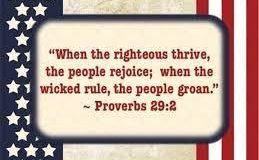
Bad governance and our loss of freedom is the direct result of the church’s failure to disciple. When the citizenry do not seek to be obedient to God’s Law, they vote in wicked and corrupt candidates, who then trample underfoot the God-given liberties of the people.