
Mobile-Friendly, Interactive Voter Guides
State Senate District 11 Candidates
State Senate District 11 Candidates
Listed in Ballot Order
Survey Questions for This Race
- Priorities, Vision, and Experience: What priorities and vision do you have for the office of Colorado State Senator, and how would your personal and professional experience contribute to that?
- Accountability: Colorado's Sunshine Law and Taxpayer Bill of Rights are examples of accountability measures that Colorado's electorate voted into law. What are your beliefs on ethics in government, and how would you seek to improve accountability and transparency as they relate to the office of Colorado State Senator?
- 1st Amendment: What are your thoughts on the establishment clause; and if elected, what will you do to protect your constituents' rights to freedom of religion, speech, peaceable assembly, and petitioning the government for a redress of grievances?
- 2nd Amendment: In light of recent Colorado legislation and US Supreme Court's rulings regarding our nation's historical tradition of firearms regulation, what steps would you take to protect the rights of the people while addressing gun violence?
- Anti-Americanism and Antisemitism: There has been a rise in incidences of anti-Americanism and antisemitism in Colorado and across our nation. What do you view as the causes, and what should be done to address these issues?
- Economy and Resources: If elected, what initiatives would you champion to improve Colorado's economy, including policies on water, energy, and other resources, and how would you make your office more fiscally responsible?
- Education: If elected, how would you help improve the educational outcomes for Colorado's students, and what is your position on parental authority in K-12 education, including school choice and parental notification?
- Protecting the Most Vulnerable: If elected, how will you seek to protect the lives of the most vulnerable in our community, including the unborn, victims of trafficking and abuse, senior citizens, and those experiencing mental illness?
- Public Safety and Rule of Law: What are your priorities for addressing crime in Colorado, including issues such as cybercrime and the slavery of human trafficking, and how do you view the role of state policy in addressing immigration-related challenges and coordination with federal authorities? Also, what is your opinion regarding sanctuary city (or county) policies?
- Election Integrity: Do you believe that elections should be conducted differently in order to ensure integrity and confidence? Should people be required to show proof of citizenship in order to register to vote, and/or be required to show a Government-issued ID to cast their vote?
- Constitutional Compatibility: Many Christians are concerned about ideologies that place the state, the collective, or religious law above individual liberty and limited constitutional government. Do you believe socialism, communism, or political movements seeking to impose religious law — including Islamic Sharia law — are compatible with America's constitutional representative democracy? Why or why not?
Tony Exum
Priorities, Vision, and Experience
What priorities and vision do you have for the office of Colorado State Senator, and how would your personal and professional experience contribute to that?
One thing I’ve learned from being an elected state legislator is that different people have different urgent needs. Some people are unemployed and need immediate assistance, which is why I’ve supported bills to expand unemployment benefits. Other people are being poisoned by toxic chemicals and need clean drinking water, which is why I’ve run bills to ban toxic PFAS firefighting foams. There isn’t just one or two pressing issues facing people in Senate District 11, there are many, and they all need immediate attention.
Which is why my top priorities as a state legislator have always been these three things: supporting public education, protecting the environment, and helping low-income families, people of color, and the elderly live better lives.
Accountability
Colorado's Sunshine Law and Taxpayer Bill of Rights are examples of accountability measures that Colorado's electorate voted into law. What are your beliefs on ethics in government, and how would you seek to improve accountability and transparency as they relate to the office of Colorado State Senator?
Government is only as good as the people who work in it, which is why ethics, integrity, and accountability must start with each public servant. Colorado has both internal and external ways to hold legislators accountable. Internally, Senate rules, personnel policies, and the Senate Ethics Committee provide mechanisms to address misconduct and ethical concerns. Externally, laws like the Colorado Open Records Act (CORA) and the Open Meetings law give the public access to government meetings and records, helping citizens see how their government operates. As an elected State Senator, I have always supported transparency, worked hard to follow the rules, and welcomed appropriate public scrutiny of my work, and I believe my record shows it.
1st Amendment
What are your thoughts on the establishment clause; and if elected, what will you do to protect your constituents' rights to freedom of religion, speech, peaceable assembly, and petitioning the government for a redress of grievances?
Not every constituent I represent supports every position I advocate for in the legislature—and sometimes they let me know it! I receive phone calls, emails, and in-person visits from people who support my work and from people who strongly disagree with me. That is exactly how democracy is supposed to work.
I believe the government should neither establish a religion, nor give deference or preference to any religion, nor interfere with anyone’s right to practice their faith, speak their mind, assemble peacefully, or petition their government. As an elected State Senator, I have and will continue protecting those rights, listen respectfully to everyone, and ensure that disagreement is never a reason to deny anyone a voice in their government.
2nd Amendment
In light of recent Colorado legislation and US Supreme Court's rulings regarding our nation's historical tradition of firearms regulation, what steps would you take to protect the rights of the people while addressing gun violence?
Some guns have a place in American life, for hunting, sport, and home defense. There’s nothing inherently wrong with that. When rights are abused, though, that’s a problem. I believe military-style weapons have no place in civilian hands or in our communities, and keeping deadly weapons out of the hands of dangerous people should always be our top priority. This is why I’ve supported bills to close background check loopholes, and why I’ve also supported bills requiring waiting periods, because “in the heat of the moment” is not when anyone should be given a gun. I’ve also supported legislation requiring the safe storage of firearms in houses with children in them, among other sensible measures.
Anti-Americanism and Antisemitism
There has been a rise in incidences of anti-Americanism and antisemitism in Colorado and across our nation. What do you view as the causes, and what should be done to address these issues?
Too many people today believe complicated problems can be solved with simple violence. This is dangerous, whether it is directed against fellow Americans, Jewish communities, or anyone else.
To echo JFK, there will always be dissident voices in this land—expressing opposition without alternatives, finding fault but never favor, perceiving gloom on every side, and seeking influence without responsibility. Those voices are inevitable. We cannot expect everyone to “talk sense to the American people.” But we can hope fewer people will listen to nonsense.
We must confront antisemitism and anti-American hatred wherever they appear, educate people against hatred and conspiracy, reject political violence, and defend the freedom to disagree peacefully.
Economy and Resources
If elected, what initiatives would you champion to improve Colorado's economy, including policies on water, energy, and other resources, and how would you make your office more fiscally responsible?
As I have always done, I will support laws protecting consumers from fraud, price gouging, and abuse; investing into poverty reduction programs, homelessness supports, and food pantries; growing broad economic prosperity by expanding employment support services for unemployed and underemployed workers; protecting the rights of workers to fair pay and safe workplaces; investing in small businesses, supporting their creation and growth; and investing in community development, public transportation, and public education.
Climate change is affecting us now, so we’re investing more into wildfire mitigation, into water conservation, into environmental protection and preservation, and into energy efficiency with our buildings, appliances, and vehicles. We’ve passed legislation addressing all of these issues, and I’ve been glad to support that legislation.
Education
If elected, how would you help improve the educational outcomes for Colorado's students, and what is your position on parental authority in K-12 education, including school choice and parental notification?
This is not a question which can be answered in just 120 words, so let me say this: when I served on the House’s Education committee, I became very aware of the problems facing our public education system – from strained funding sources, to deteriorating buildings and vehicles, to teacher shortages, and curriculum controversies – and I have worked as a legislator to help address these problems, and I’ve run many bills myself to help solve some of them. If I am re-elected into the State Senate, as I hope I will be, I will continue working with teachers, students, parents, administrators, and elected officials to improve our whole education system, not just K-12 but also higher education too.
Protecting the Most Vulnerable
If elected, how will you seek to protect the lives of the most vulnerable in our community, including the unborn, victims of trafficking and abuse, senior citizens, and those experiencing mental illness?
I have always worked to protect vulnerable people from exploitation and abuse. And my legislative record shows it. I’ve voted on nearly a dozen bills related to human trafficking: helping law enforcement identify and intercept human trafficking rings; increasing the penalties for convicted traffickers; and helping children and women get the services they need to adjust to life after trafficking, among other bills. And with elder care, I’ve supported bills to increase oversight in elder care facilities, to help prevent abuse; I've passed bills expanding the health and medical services available to elders; and expanded access to state services for the elderly, blind, and disabled. I will continue supporting vulnerable peoples in the State Senate.
Public Safety and Rule of Law
What are your priorities for addressing crime in Colorado, including issues such as cybercrime and the slavery of human trafficking, and how do you view the role of state policy in addressing immigration-related challenges and coordination with federal authorities? Also, what is your opinion regarding sanctuary city (or county) policies?
As just mentioned, I have supported several bills strengthening enforcement efforts against human trafficking. (See previous answer.) And I will continue doing so.
As for the second part of the question, the state government has no role in enforcing federal immigration laws. The 1997 Supreme Court case, Printz v. United States, ruled state officers cannot be forced (“commandeered”) to enforce federal laws. This means state officers cannot be used to enforce federal immigration laws. I support the anti-commandeering rule in this circumstance.
Election Integrity
Do you believe that elections should be conducted differently in order to ensure integrity and confidence? Should people be required to show proof of citizenship in order to register to vote, and/or be required to show a Government-issued ID to cast their vote?
Colorado has one of the best election systems in the country. People must have a valid government-issued ID to register to vote, and you can register to vote online and even on election day itself. When you’re registered, your ballot is mailed to you weeks before election day, so you have time to research the candidates and issues. You can return your ballot by mail, or by ballot drop boxes, or by going to the county clerk’s office. Or, if you don’t want to vote by mail, you can vote in person, weeks before the election or on election day itself. Our system is good, secure, and accurate.
Constitutional Compatibility
Many Christians are concerned about ideologies that place the state, the collective, or religious law above individual liberty and limited constitutional government. Do you believe socialism, communism, or political movements seeking to impose religious law — including Islamic Sharia law — are compatible with America's constitutional representative democracy? Why or why not?
As a man of faith, my religion is important to me and a prominent aspect of my life. Which is why I fully support the idea of a separation between church and state—where no church tells its congregation for whom to vote, and no government tells its people how to pray. And I whole-heartedly oppose people using their religion as an excuse to be bigoted, disguising intolerance as religious freedom. I’ve worked hard to uphold these principles in the legislation I support, and I believe my record shows I’ve done that. I believe it is critical that we continue to protect our first amendment rights, and I believe our community should be a safe, inclusive place for everyone.
Levon Stilson
Priorities, Vision, and Experience
What priorities and vision do you have for the office of Colorado State Senator, and how would your personal and professional experience contribute to that?
My priorities are making life more affordable for families, defending freedom, and restoring public safety. I will pursue those goals by working with colleagues, stakeholders, and the residents of Senate District 11 to put their needs first and to eliminate pet projects whose results are unclear. Taxpayers should keep more of what they earn, and the dollars they send to Denver should go to infrastructure, public safety, and the basic services the state has under-delivered for a decade. My approach is shaped by observing the direction Colorado has taken as a lifelong resident, raising three children here, running a residential construction company in an oppressive regulatory and fiscal environment, and time spent working in the legislature.
Accountability
Colorado's Sunshine Law and Taxpayer Bill of Rights are examples of accountability measures that Colorado's electorate voted into law. What are your beliefs on ethics in government, and how would you seek to improve accountability and transparency as they relate to the office of Colorado State Senator?
Maintaining public trust is of the utmost importance. Officials should follow the laws they write, disclose conflicts, and treat taxpayer money as their neighbors’. Colorado voters already set that baseline in the Sunshine Law and TABOR. As senator I would treat those measures as a floor, not a ceiling. I would sponsor bills to make state revenue and spending easier to follow. TOPS is a start, created by HB09-1288 and later required to list vendor names by HB22-1108, but it remains hard to search and incomplete regarding how those vendors use the funds. I would make it fully searchable, consistently name vendors except where law requires otherwise, and highlight waste so citizens can follow the money without special tools.
1st Amendment
What are your thoughts on the establishment clause; and if elected, what will you do to protect your constituents' rights to freedom of religion, speech, peaceable assembly, and petitioning the government for a redress of grievances?
The Establishment Clause stops the state from creating a church or picking a favored faith. It does not give government power to silence believers or force anyone to speak against conscience. Speech, worship, assembly, and petition belong to the people.
I will keep committee hearings open, with no arbitrary caps on testimony, and use every vote and procedural tool against bills that compel speech or punish belief. In 2025 the majority tried, through HJR25-1023, to hire lawyers for the General Assembly to strike down TABOR. That resolution failed, but the tactic was clear. I would use the same kind of legislative authority to challenge statutes like HB25-1312, the Kelly Loving Act, that turn names and pronouns into weapons against 1A.
2nd Amendment
In light of recent Colorado legislation and US Supreme Court's rulings regarding our nation's historical tradition of firearms regulation, what steps would you take to protect the rights of the people while addressing gun violence?
The Second Amendment is a pre-existing right. Colorado has stacked restriction on restriction; magazine caps, waiting periods, and now SB25-003’s permit-to-purchase scheme, yet gun violence has not gone down. That record should end the habit of treating law-abiding owners as the problem. I will debate every gun bill in committee and on the floor and work with CSSA, NRA, RMGO, and similar groups to stop further erosion of our rights. Violence falls when criminals face certain and lengthy sentences for acts of violence. They need to be actually enforced where they currently are not. That incentive structure, not more paperwork and more unconstitutional laws is how we protect both the right and the public.
Anti-Americanism and Antisemitism
There has been a rise in incidences of anti-Americanism and antisemitism in Colorado and across our nation. What do you view as the causes, and what should be done to address these issues?
What we need is more mature debate: people making their case in public, answering questions, and allowing individuals to be compelled by the most coherent argument. Charlie Kirk showed that model; open forums, the marketplace of ideas, and good-faith civic discourse. Government’s part is simple. Protect the right to speak, assemble, and worship. Enforce the law when someone crosses into threats or violence, not pick winners in the argument or preventing the argument from taking place.
Economy and Resources
If elected, what initiatives would you champion to improve Colorado's economy, including policies on water, energy, and other resources, and how would you make your office more fiscally responsible?
Colorado’s economy improves when government does fewer things well: enforce the law, protect rights and property, resolve disputes, and keep people safe. I would cut programs that do not meet that test and stop funding pet projects with no clear result, so families and small businesses keep more of what they earn. On water, energy, and other resources, the state’s job is infrastructure not picking winners and losers. Communities need reliable water and power, the market will provide that. My job is to establish clear, predicable guardrails not to dictate the outcomes in their entirety. I will oppose policies that starve productive use, stack costs onto ratepayers, or treat basic infrastructure as optional.
Education
If elected, how would you help improve the educational outcomes for Colorado's students, and what is your position on parental authority in K-12 education, including school choice and parental notification?
Colorado has already tried the expensive path. Since 2013, per-pupil spending has risen about 92 percent, to roughly $16,600, while NAEP reading fell through the decade and math remains below where it started. More money without accountability is not a strategy.
Parents, not bureaucracies, hold primary authority over a child’s education. I support school choice so families can take their dollars to the school that actually teaches, and I support requiring schools to notify parents about curriculum, health, and major decisions affecting their child. Let schools compete on merit and outcomes. Students educational outcomes improve when parents have the choice to leave a failing school and take the funding with them.
Protecting the Most Vulnerable
If elected, how will you seek to protect the lives of the most vulnerable in our community, including the unborn, victims of trafficking and abuse, senior citizens, and those experiencing mental illness?
Protecting the vulnerable starts with a state people can afford to live in. Housing and daily costs crush family formation, prosperity is how fewer women are pushed toward infanticide. FBI data show 2024 was Colorado’s second-highest year on record for human trafficking. Weak consequences invite that market. I will back stronger penalties and actual enforcement against traffickers and abusers. Seniors should be able to downsize without losing the property-tax exemption because they have not owned and occupied the new home for ten years, this needs to change so they can downsize and free up houses for growing families. On mental illness, fund programs with proven results and stop policies that subsidize the addiction cycle that so often drives the crisis.
Public Safety and Rule of Law
What are your priorities for addressing crime in Colorado, including issues such as cybercrime and the slavery of human trafficking, and how do you view the role of state policy in addressing immigration-related challenges and coordination with federal authorities? Also, what is your opinion regarding sanctuary city (or county) policies?
Crime falls when the state does its first job: enforce the law and make the penalty certain. That includes street violence, cybercrime, and human trafficking. I will support longer sentences for traffickers and violent offenders and insist that existing prohibitions are enforced.
Immigration is a federal duty, but the state and local governments are not free to obstruct it. I will support the coordination with federal authorities, oppose sanctuary city and county policies, and work to limit state funding to municipalities that refuse to honor detainers or share information required to enforce the law. Local officials who advertise non-cooperation should not expect the legislature to subsidize that choice.
Election Integrity
Do you believe that elections should be conducted differently in order to ensure integrity and confidence? Should people be required to show proof of citizenship in order to register to vote, and/or be required to show a Government-issued ID to cast their vote?
People should have to prove U.S. citizenship to register, and they should show a government-issued photo ID to vote. Those are ordinary requirements, standard in democratic systems worldwide. They are required for a bank account, a plane ticket, to buy, tobacco, cannabis, and alcohol. I would support legislation that writes both rules into statute and keep voter rolls current. Lawful voters should never be asked to trust a system they cannot verify.
Constitutional Compatibility
Many Christians are concerned about ideologies that place the state, the collective, or religious law above individual liberty and limited constitutional government. Do you believe socialism, communism, or political movements seeking to impose religious law — including Islamic Sharia law — are compatible with America's constitutional representative democracy? Why or why not?
America is a constitutional republic, not a system that puts the state, a political party, or a religious code above the person. Socialism and communism concentrate power in the collective and the state. That is the opposite of limited government and enumerated rights. People may argue about those ideas, but they may not write them into law as if the Constitution were optional. The same line applies to religious law. Freedom of religion is a constitutional right. A parallel legal system, Sharia or any other is not. Courts, legislatures, and citizens answer to the Constitution, not to a second code. Speech about political and religious ideas is protected. Implementing those systems in place of American law is not.
Janet Turner
Priorities, Vision, and Experience
What priorities and vision do you have for the office of Colorado State Senator, and how would your personal and professional experience contribute to that?
Protecting individual liberty, keeping government accountable, being responsible with taxpayers’ money, and making sure that government stays within its proper role.
Government should work for the people, not the other way around. People should have the freedom to make their own choices, Government spending carefully scrutinized, where we protect our constitutional rights while respecting the rights of every individual.
Occupational therapy has taught me people want to be independent. My job was to help people overcome obstacles, develop the skills they needed, and have as much independence and control over their own lives as possible. I believe that principle applies to government as well. Rather than creating more dependence on government, we should find ways to remove unnecessary barriers
Accountability
Colorado's Sunshine Law and Taxpayer Bill of Rights are examples of accountability measures that Colorado's electorate voted into law. What are your beliefs on ethics in government, and how would you seek to improve accountability and transparency as they relate to the office of Colorado State Senator?
Thats an important question, I don't want to pretend I have a simplistic answer to this complicated issue. Start with individual liberties, fiscal responsibility and accountability, look at what government actually has the constitutional authority and responsibility to do.
1st Amendment
What are your thoughts on the establishment clause; and if elected, what will you do to protect your constituents' rights to freedom of religion, speech, peaceable assembly, and petitioning the government for a redress of grievances?
The Establishment Clause is an important protection for religious liberty. Government should not establish, endorse, or favor one religion over another.
Protect the right of citizens to petition government when they believe their rights have been violated. Those rights belong to everyone, regardless of their political beliefs, religion, or viewpoint.
Constitutional protections need to be taken seriously. I would oppose government policies that improperly restrict lawful speech, peaceful assembly, religious exercise.
I believe these freedoms are not privileges granted by government. They are individual rights that government has a responsibility to protect.
A free society requires us to protect the rights of people we agree with—and equally importantly, the rights of people we don’t.
2nd Amendment
In light of recent Colorado legislation and US Supreme Court's rulings regarding our nation's historical tradition of firearms regulation, what steps would you take to protect the rights of the people while addressing gun violence?
The second amendment recognizes an individual right that I believe government should respect. Law abiding citizens are not the problem, the focus should be on the population that is actually committing crimes. The guns are not the problem. I believe the tighter the restrictions on control, allows the illegal distribution of guns to broaden. We can have both public safety and individual liberty.
Anti-Americanism and Antisemitism
There has been a rise in incidences of anti-Americanism and antisemitism in Colorado and across our nation. What do you view as the causes, and what should be done to address these issues?
There are many causes and we shouldn't pretend there is just one. Antisemitism/anti Americaism has existed for centuries and can come from ignorance, conspiracy theories, religious or racial prejudice, political extremism, and the tendency to blame an entire group for the actions of individuals or governments. Social media can also amplify misinformation. One of the best ways to combat both is through education, open discussion, and individual responsibility.
We should not respond to bad ideas by abandoning our own principles. America is strongest when we protect freedom of speech, freedom of religion, equal treatment under the law, and the right of peaceful people to disagree.
We should this while remaining true to freedoms and constitutional principles that define this country.
Economy and Resources
If elected, what initiatives would you champion to improve Colorado's economy, including policies on water, energy, and other resources, and how would you make your office more fiscally responsible?
No answer provided.
Education
If elected, how would you help improve the educational outcomes for Colorado's students, and what is your position on parental authority in K-12 education, including school choice and parental notification?
No answer provided.
Protecting the Most Vulnerable
If elected, how will you seek to protect the lives of the most vulnerable in our community, including the unborn, victims of trafficking and abuse, senior citizens, and those experiencing mental illness?
No answer provided.
Public Safety and Rule of Law
What are your priorities for addressing crime in Colorado, including issues such as cybercrime and the slavery of human trafficking, and how do you view the role of state policy in addressing immigration-related challenges and coordination with federal authorities? Also, what is your opinion regarding sanctuary city (or county) policies?
No answer provided.
Election Integrity
Do you believe that elections should be conducted differently in order to ensure integrity and confidence? Should people be required to show proof of citizenship in order to register to vote, and/or be required to show a Government-issued ID to cast their vote?
No answer provided.
Constitutional Compatibility
Many Christians are concerned about ideologies that place the state, the collective, or religious law above individual liberty and limited constitutional government. Do you believe socialism, communism, or political movements seeking to impose religious law — including Islamic Sharia law — are compatible with America's constitutional representative democracy? Why or why not?
No answer provided.
JOIN THE COALITION
JOIN OUR E-LIST
Christian voting
Voting is a simple, yet significant way to do something about public policy in our country. As people of faith, we will be held accountable for our actions, as well as our lack of action. (Luke 12:48)
Biblical worldview
By diligently learning, applying, and trusting God’s truths in every area of our lives, we can begin to develop a deep comprehensive faith that will stand against the unrelenting tide of our culture’s non-biblical ideas.
Vote your values
The issues of the day change. Political parties and platforms change. God’s Word never changes. The vote of every Christian should be based on the principles of Scripture and not persuasive personalities.
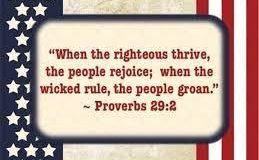
Electing righteous leaders
Bad governance and our loss of freedom is the direct result of the church’s failure to disciple. When the citizenry do not seek to be obedient to God’s Law, they vote in wicked and corrupt candidates, who then trample underfoot the God-given liberties of the people.